Step 1 — Define your physical requirement before you look at anything
- Four numbers, in this order. Get them wrong and every tour after is wasted.
- Square footage. Storage footprint plus staging plus office plus aisles plus growth. Storage alone is usually under half your total. See How Much Warehouse Space Do I Need?.
- Clear height. Usable vertical space, not ceiling height. Determines how much of your requirement goes vertical instead of horizontal. See Clear Height Explained.
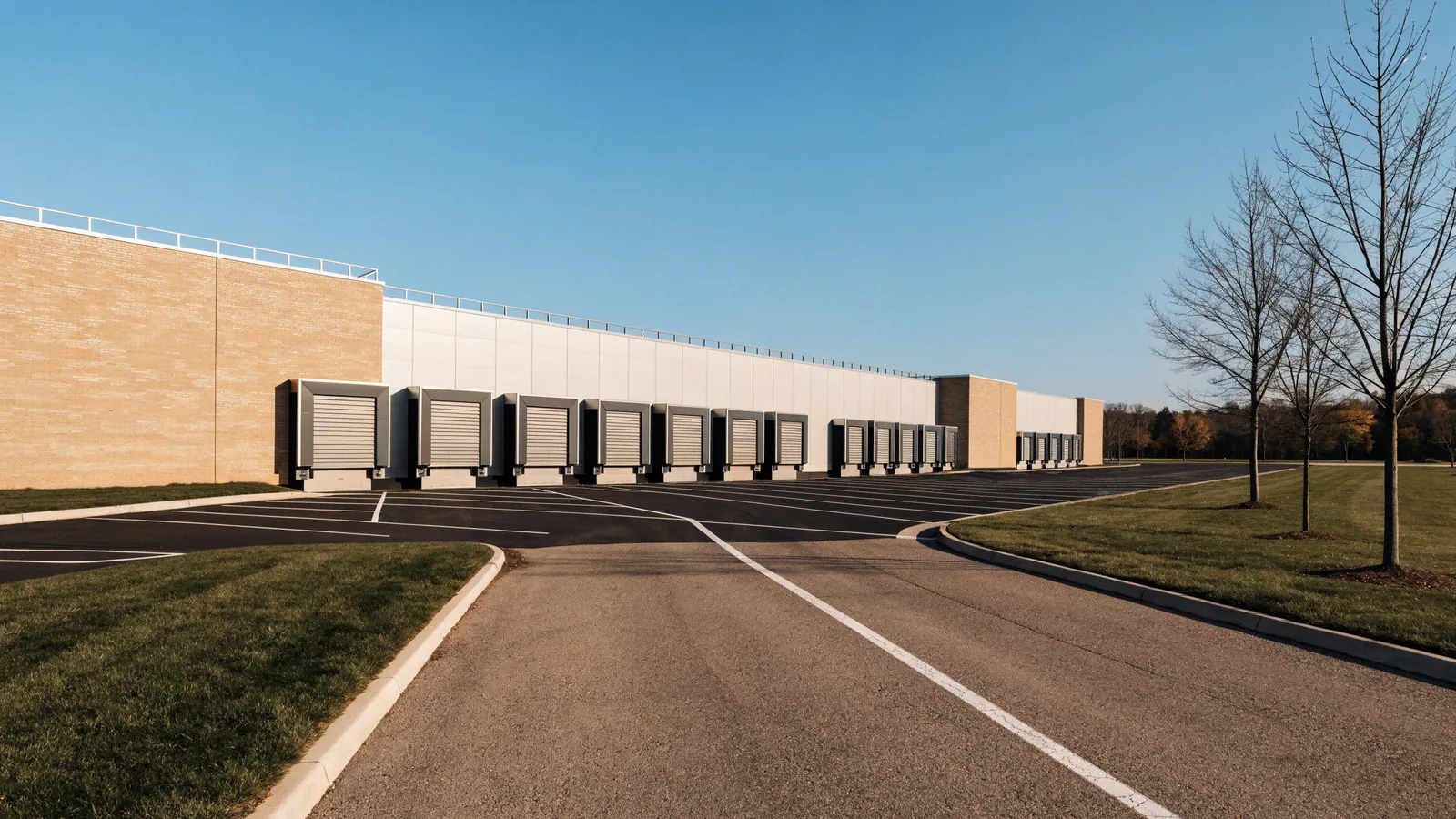
- Loading. Grade-level drive-in for vehicles and equipment, dock-high for trailer freight. Door height matters as much as door type. See Loading Docks, Drive-In Doors, and Truck Courts.
- Power. Voltage and amperage from the equipment plate, not from memory.
Step 2 — Confirm zoning and use before you negotiate anything
Two separate questions, and both have to be yes.
Does municipal zoning permit your use at this address? Zoning is local. A use permitted in one city may not be permitted in the next one over, in a nearly identical building. See Michigan Industrial Zoning.
Does the lease use clause cover what you actually do? A generic use clause saying "warehouse and office" does not cover vehicle washing, spray finishing, welding or anything generating waste or runoff. Describe your real operation at letter of intent stage.
- This is the step tenants skip and it is the expensive one. A use clause that does not match your operation is a default waiting to happen.
Step 3 — Search, and understand why the good small suites are invisible
Small-bay suites frequently lease from a waitlist, an existing tenant expanding or a direct inquiry, and never reach a listing platform. If you need under 5,000 square feet, contact owners and managers of multi-tenant parks directly and get on their list before you need the space. See Small Warehouse Space for Rent in Michigan.
- On a tour, check the things that are not in the listing: where the door sits relative to usable floor, column placement inside your intended rack layout, whether a truck can actually maneuver in the yard, and what the neighboring tenants do.
Step 4 — The letter of intent, and what to put in it
- The LOI is non-binding and it is where your leverage lives. Items settled here are cheap. The same items raised after the lease is drafted are expensive and sometimes refused.
Put these in the LOI:
Base rent, lease structure and term
Free rent or abatement, if any
Tenant improvement allowance and who performs the work
Your actual use, described plainly
Right of first refusal or expansion option on adjacent space
Any cap on controllable CAM increases
Guaranty terms and any cap on exposure
Renewal option and how renewal rent is set
Signage rights
Any exterior storage or vehicle parking you need
Step 5 — Negotiating the lease
The provisions that move the most money, roughly in order:
- Lease structure. Modified gross, triple net or gross determines whether your monthly number is predictable. See Triple Net vs Modified Gross vs Gross.
- CAM and what can be passed through. Especially whether capital expenditures can be charged to you and whether they are amortized. See What Is CAM in an Industrial Lease?.
- HVAC repair versus replacement. Who pays when the rooftop unit fails, and what triggers replacement rather than repeated repair.
- Tenant improvement allowance. Amount, who performs the work, and what happens to the improvements at expiry.
- Personal guaranty. Almost always requested for smaller tenants, and more negotiable than most realize.
- Assignment and subletting. Push for consent "not to be unreasonably withheld," plus free assignment for internal corporate reorganization.
- Default and cure periods. A short monetary cure period, available at least once a year, is a reasonable ask.
- Holdover. Know the rate. Tiered holdover, stepping up after the first thirty days, is more common and more fair than a flat penalty.
- Relocation clause. If the landlord can move you, insist substitute space be functionally equivalent, specifically on doors, power and drainage, with a termination right if it is not.
Step 6 — Permitting and certificate of occupancy
Do not assume you can move in the day you sign. Depending on the municipality and whether your use differs from the prior tenant's, you may need a certificate of occupancy, and any buildout needs permits. Build this into your timeline before you give notice on your current space. See Certificate of Occupancy for Industrial Tenants in Michigan.
Step 7 — Before you take occupancy
Certificate of insurance naming the landlord as additional insured. Utilities transferred. Any environmental or pollution liability coverage in place if your use requires it. A documented walk-through with dated photographs of existing condition, which protects your deposit at the other end.
Realistic timeline
- As-is suite: two to four weeks from LOI to occupancy. Light buildout: six to ten weeks, mostly permitting. Significant buildout: twelve to sixteen weeks or more.
Standard term across most Michigan multi-tenant industrial parks, including ours, is three to five years. Shorter terms are occasionally considered on as-is suites and typically price higher.
Frequently asked questions
How long does it take to lease industrial space in Michigan?
Two to four weeks for an as-is suite, eight to sixteen weeks when buildout and permitting are involved.
What is the minimum lease term for warehouse space?
Three to five years is standard in professionally managed multi-tenant parks. Month-to-month is essentially unavailable in this segment.
Do I need a broker to lease industrial space?
Not necessarily. Leasing direct from an owner-operator removes a layer and gets faster answers on buildout, use and modifications. If you use a tenant rep, confirm early who pays the commission.
What deposit should I expect?
Typically one to two months, varying with creditworthiness, term and buildout.
Can I get out of an industrial lease early?
Rarely without cost. Early termination options, if granted at all, are negotiated at LOI stage and usually carry a fee. Assignment or subletting is the more common exit.
What is the single most common mistake?
Signing a use clause that does not match the operation. Second most common is undersizing, because relocating mid-term costs more than the rent difference would have.