What CAM typically covers
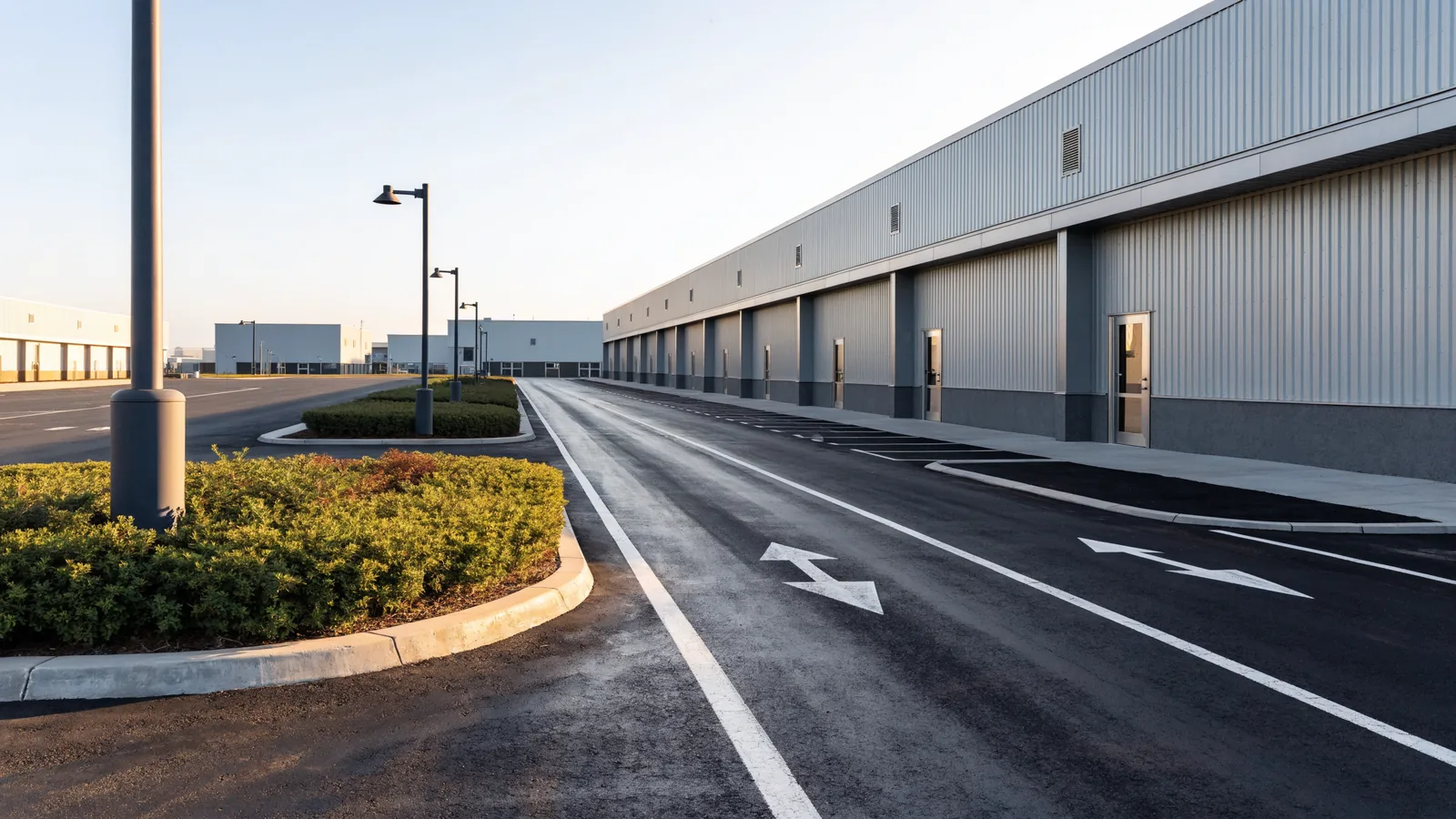
Snow removal and salting, which in Michigan is one of the larger and most variable line items. Parking lot maintenance, sweeping and striping. Landscaping and irrigation. Exterior and common area lighting. Common area utilities. Trash removal, where shared. Property management fees. Exterior building repairs and maintenance. Fire protection system inspection and monitoring. Security, where provided. Common area insurance, though insurance is often broken out separately in a triple net structure.
How your share is calculated
The standard method is your rentable square footage divided by the building's or park's total leasable square footage, applied to total CAM expense.
Three details change the arithmetic more than tenants expect:
- What counts as the denominator. The building, or the whole park? A tenant in a 125,000 square foot multi-building park should know which pool their share is drawn from.
- Gross-up. In a partly occupied property, a gross-up clause calculates variable costs as though occupancy were higher, commonly 95 percent. The logic is that a tenant should not benefit or suffer from the landlord's vacancy. The effect is that your share rises. Understand the formula and which costs it applies to.
- Whether rentable includes a load factor. If your rentable figure is larger than your usable figure, your CAM share is calculated on the larger number.
What should not be in CAM, and frequently is
The section worth reading twice.
Capital expenditures. A roof replacement or a parking lot reconstruction is a capital item, not maintenance. Many landlord-form leases permit passing it through anyway. At minimum, negotiate that capital items be amortized over their useful life so you pay only for the years you occupy. Better, negotiate that structural and roof replacement be excluded entirely.
- Costs of leasing space. Commissions, marketing, legal fees for other tenants' leases, and buildout for other tenants are the landlord's cost of doing business, not your maintenance.
- Landlord's financing and ownership costs. Debt service, ground rent, depreciation and income tax.
- Repairs covered by insurance or warranty. If the landlord recovers from an insurer, you should not pay for it too.
- Costs attributable to a single tenant. If another tenant's operation causes a repair, that is theirs.
Fines and penalties from the landlord's own non-compliance.
- Excessive administrative fees. An administrative or management fee on top of actual CAM is normal. Ask what the percentage is and whether it is calculated on CAM alone or on gross rent.
How to read a reconciliation
Most triple net leases estimate CAM monthly and reconcile after year end. You either owe a balance or receive a credit.
- Check the denominator. Did occupancy or total square footage change?
- Compare line by line against last year. Ask about anything that moved substantially.
- Look for capital items. A large repair line is worth a question about whether it was amortized.
Verify the administrative fee against what the lease permits.
- Check your dates. If you occupied part of the year, your share should be prorated.
- Use your audit right. Most leases give you one, usually within a limited window after the statement. Missing the window waives it.
What to negotiate before you sign
A cap on controllable CAM. Commonly a percentage per year, cumulative or non-cumulative. Taxes and insurance are normally carved out as uncontrollable. Among the most valuable things a small tenant can ask for and among the least frequently requested, because landlords will often concede a cap sooner than a lower base rent.
- Exclusions in writing. The list above, or as much of it as you can get.
Amortization of capital items over useful life.
An audit right with a workable window.
A base year in a modified gross structure, if there is one, and clarity on what escalates from it.
How this works at our properties
All three lease modified gross, which means more is bundled into the rate and less arrives as a separate reconciliation. Tenants are generally responsible for their own utilities. The specific treatment varies by suite and lease structure.
Ask us, as you should ask any landlord, for a complete occupancy cost breakdown showing base rent, what is included, what is billed separately and what your total cost per square foot is likely to be. We would rather answer that in the first conversation than have it become a surprise later.
Frequently asked questions
What does CAM stand for?
Common area maintenance.
Is CAM negotiable?
The rate usually is not, since it reflects actual cost. What goes into it, whether it is capped, and whether capital items are amortized are all negotiable.
How much is CAM per square foot?
It varies by property, age and how much shared area there is. Ask for the current estimate and last year's actual for the specific building rather than a market average.
Do I pay CAM in a modified gross lease?
Often it is bundled into your rate, sometimes partly separate. Read the specific lease.
Can I audit CAM?
Most leases grant a limited audit right within a set window after the annual statement. Diary the deadline.
Read Triple Net vs Modified Gross vs Gross next, or see Available Space.
See available space Call 248-246-1752