Zoning and your lease are two different permissions
This trips up more tenants than anything else in industrial leasing.
Municipal zoning governs what activity may legally occur at an address. Granted by the city or township.
The lease use clause governs what the landlord permits you to do in the suite. Granted by the landlord.
You can have one without the other, and either one missing stops you. A landlord who approves an automotive use does not make it zoning-compliant. A city that permits light manufacturing does not override a lease that limits you to warehouse and office.
Light industrial versus heavy industrial
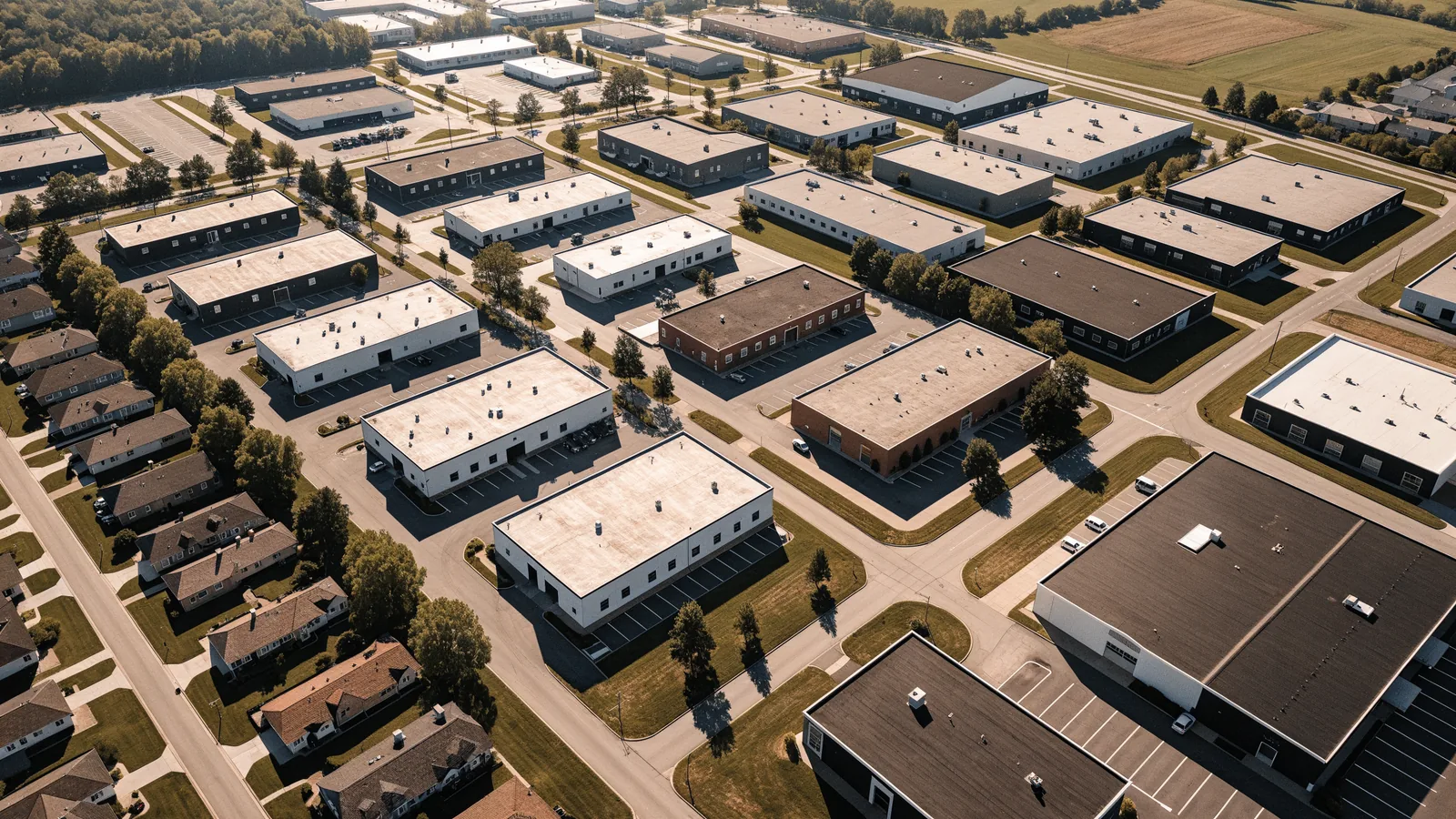
Light industrial typically covers warehousing, distribution, light assembly, fabrication, research and development, service businesses, contractor operations and related office. This is where most small-bay tenants belong. All three of our properties are zoned light industrial.
Heavy industrial covers uses with greater environmental or nuisance impact: significant emissions, noise, vibration, outdoor processing or hazardous materials handling at scale.
- The practical line is impact, not size. A small operation generating fumes, noise or waste can fall outside light industrial. A larger quiet warehouse sits comfortably inside it.
The uses that most often need extra review
- Automotive. Repair, bodywork, painting, vehicle storage, outdoor parking and oil handling routinely require specific review and are frequently restricted.
- Anything with fumes or emissions. Spray finishing, powder coating, welding at volume. Usually requires permitted exhaust and sometimes triggers a different classification.
- Food production. Adds health department approval on top of zoning.
- Fitness, instructional and assembly uses. Increasingly common in flex buildings and often treated as an assembly occupancy, which changes code requirements including egress, restrooms and parking counts. Frequently permitted with approval.
- Retail in an industrial building. Often limited or prohibited, or capped as a percentage of floor area.
- Cannabis. Heavily regulated at the municipal level with opt-in and opt-out by community, plus separate state licensing. Many landlords and nearly all lenders decline it regardless of zoning.
- Outdoor storage. Frequently a separate zoning question with screening and surface requirements. See Outdoor Storage, Trailer Parking and Yard Space.
How to check, in about a day
- Get the exact address and the zoning district. The landlord or the municipality's zoning map will have it.
Pull the municipality's permitted use table for that district from its published ordinance.
Call the zoning or planning department and describe your operation in plain terms rather than reading them a category. Ask specifically whether it is permitted by right, permitted with special approval, or prohibited.
- Ask about parking requirements. Some uses, particularly assembly and retail-adjacent ones, carry parking ratios the site may not satisfy.
- Ask what a change of use triggers. If the prior tenant did something different, you may need a certificate of occupancy and inspections. See Certificate of Occupancy for Industrial Tenants.
Get it in writing if there is any doubt.
Special land use, variances and why they are risky
If your use requires special approval rather than being permitted by right, you are asking a planning commission or zoning board to say yes. That is a public process with a timeline of weeks to months and no guaranteed outcome.
If you go down that road, do not sign a lease that starts paying rent before approval is granted. Negotiate a contingency at letter of intent stage.
At our properties
Rankin Business Park, Z Novi Commons and Northville Research Center are all zoned light industrial, supporting a broad range of industrial, flex and office uses. Every proposed use remains subject to both zoning and landlord approval.
Tell us what the operation actually does day to day, including anything involving vehicles, fluids, fumes, noise or customer traffic, and we will tell you before you spend money on a lease. We would rather lose a deal at the enquiry stage than have a tenant in default over a use clause in month four.
Frequently asked questions
Is zoning the same across Michigan?
No. It is municipal. Troy, Novi and Northville each maintain their own ordinances and permitted use tables.
Can I run a retail business from an industrial unit?
Sometimes, often limited or capped. Ask the municipality specifically.
Who is responsible for confirming zoning, me or the landlord?
Ultimately you, as the party operating the business. A good landlord will help and will flag problems early. Do not rely on that alone.
What happens if I operate a use that is not permitted?
Municipal enforcement, and typically a lease default as well, since most leases require compliance with law.
Are your properties zoned for manufacturing?
All three are light industrial, which supports many light manufacturing and assembly uses subject to review of equipment, power, noise, vibration, ventilation and materials.
Describe your operation to us at 248-246-1752 and we will tell you whether it works before you tour.
See available space Call 248-246-1752